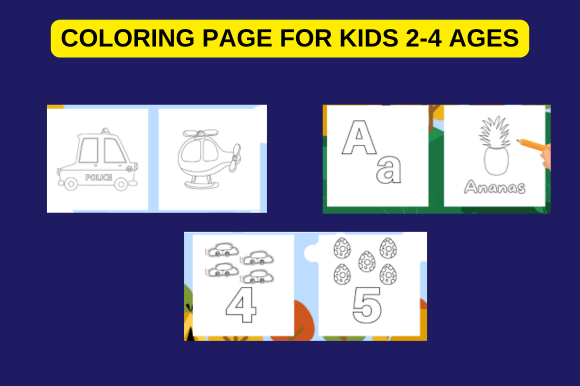
Coloring Page for Kids 2-4 Ages
Coloring pages designed for children aged 2 to 4 years are essential tools in early childhood development. These pages serve as both educational and recreational resources, helping young learners develop fine motor skills, color recognition, and hand-eye coordination. When paired with a standard 8.5x11 PDF format, these coloring pages become highly accessible, making them ideal for parents, educators, and caregivers looking to engage young minds in meaningful activities.
Understanding the Role of Coloring Pages in Early Development
For toddlers and preschoolers, coloring is more than just a pastime—it's a foundational learning experience. The act of holding a crayon or marker and moving it across paper helps build dexterity and control. As children learn to stay within lines, they also improve their focus and patience. A set of 77 pages ensures that there is enough material to sustain interest over time, providing variety and preventing boredom.
The 8.5x11 size is particularly useful because it aligns with common printer standards, allowing for easy printing at home or in school settings. This format also makes it simple to store and organize pages, whether in a binder, folder, or digital library. For educators, this consistency can streamline lesson planning and classroom management.
Integrating Coloring Pages into Daily Routines
Coloring pages can be seamlessly integrated into various daily routines, from morning activities to quiet time. For instance, using a coloring page as part of a morning ritual can help children transition smoothly into the day. It offers a calming activity that encourages focus and prepares them for other tasks ahead.
In a classroom setting, teachers might use coloring pages during free play or as a reward for completing other activities. They can also serve as a tool for teaching basic concepts like shapes, colors, and numbers. By incorporating these pages into structured learning, educators create a more engaging and interactive environment.
Before, During, and After Activities
Coloring pages can be used before, during, or after specific tasks or projects. Before an activity, they can act as a warm-up exercise, helping children settle into a focused mindset. During a project, they might serve as a break or a way to reinforce learning through visual engagement. After a task, they can provide a sense of accomplishment and a creative outlet for expression.
For example, if a child is learning about animals, a coloring page featuring different animals can be used to review the lesson. This reinforces memory and comprehension while keeping the child engaged. Similarly, after a family outing, a coloring page can be a fun way to reflect on the experience and share thoughts through drawing.
Collaboration and Shared Learning
Coloring pages are not just individual activities—they can also foster collaboration and shared learning. Parents and children can work together on a page, discussing colors, shapes, and stories. This interaction strengthens bonds and provides opportunities for communication and emotional connection.
Group settings, such as playdates or daycare centers, can benefit from coloring pages as well. Children can take turns choosing pages, sharing materials, and discussing their artwork. This promotes social skills, teamwork, and a sense of community among peers.
Practical Tips for Using Coloring Pages Effectively
To get the most out of a coloring page set, consider the following tips:
- Choose age-appropriate designs: Ensure that the images are simple enough for young children to understand and engage with. Avoid overly complex patterns that may frustrate or overwhelm.
- Use a variety of materials: Encourage creativity by offering different coloring tools, such as crayons, markers, and washable paints. This allows children to explore textures and techniques.
- Create a dedicated space: Set up a quiet, organized area where children can work on coloring pages without distractions. This helps maintain focus and reduces stress.
- Incorporate storytelling: Ask children to describe what they are drawing or create a story around the image. This enhances language development and critical thinking skills.
- Store pages systematically: Keep the 77 pages organized in folders or binders so they are easy to access and manage. Labeling sections by theme or subject can further enhance usability.
Long-Term Benefits and Consistency
Consistent use of coloring pages can lead to long-term developmental benefits. Regular practice improves motor skills, cognitive abilities, and artistic expression. Over time, children may begin to experiment with more complex designs, showing growth in both skill and confidence.
For parents and educators, maintaining a routine that includes coloring pages can support ongoing learning. Whether used as a daily activity or incorporated into weekly lessons, these pages offer a flexible and effective way to engage young learners.
Enhancing Workflow with Coloring Pages
In professional or creative workflows, coloring pages can serve as a tool for brainstorming or relaxation. For instance, a designer might use a coloring page as a break between tasks, allowing the mind to reset and refocus. Similarly, a teacher preparing lesson plans could use coloring pages as a reference for visual learning strategies.
When working with clients or students, coloring pages can also be a practical resource for illustrating concepts. They can be used to demonstrate ideas, simplify instructions, or provide a hands-on approach to learning. This adaptability makes them valuable across a wide range of applications.
Conclusion
Coloring pages for kids aged 2 to 4 are more than just a fun activity—they are a powerful tool for learning, development, and creativity. With a set of 77 pages in an 8.5x11 PDF format, these resources offer flexibility, accessibility, and long-term value. Whether used in a home, classroom, or professional setting, they can be seamlessly integrated into daily routines and workflows. By understanding their purpose and potential, parents, educators, and creators can harness the full benefits of this simple yet effective resource.