Editable 2025 Finance Planner: A Comprehensive Tool for Financial Management
The Editable 2025 Finance Planner is a powerful resource designed to help individuals and businesses take control of their financial futures. With its extensive range of features, it offers a structured approach to managing income, expenses, investments, and long-term goals. Whether you're a professional, a small business owner, or someone looking to improve personal financial habits, this planner provides the tools necessary to create a clear financial roadmap.
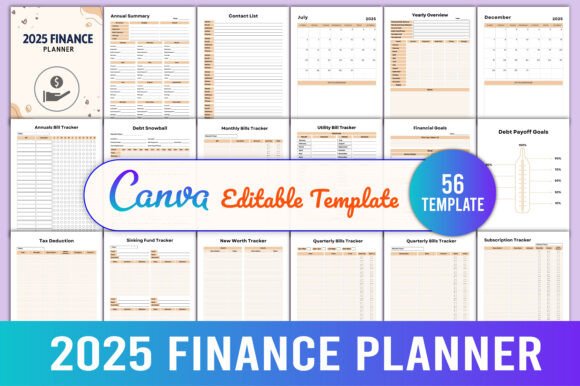
One of the standout features of the Editable 2025 Finance Planner is its adaptability. The planner comes with a variety of customizable templates that can be easily modified using a free Canva account. This makes it accessible to users of all skill levels, allowing them to tailor the content to their specific needs without requiring advanced design skills.
Key Components of the Editable 2025 Finance Planner
The planner includes a wide array of sections that cover essential financial areas. These components are designed to provide a holistic view of one's financial health and support informed decision-making. Some of the key elements include:
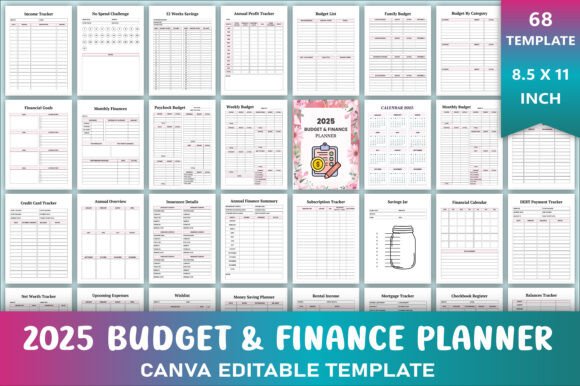
- Calendar 2025: A monthly calendar to track important financial dates such as bill due dates, tax deadlines, and investment milestones.
- Contact List: A centralized location to store contact information for banks, insurance providers, and other financial institutions.
- Password Logbook: A secure place to store login credentials for various financial accounts, ensuring easy access while maintaining security.
- Bank Account and Credit Card Info: Detailed sections to record and monitor banking and credit card details for better financial oversight.
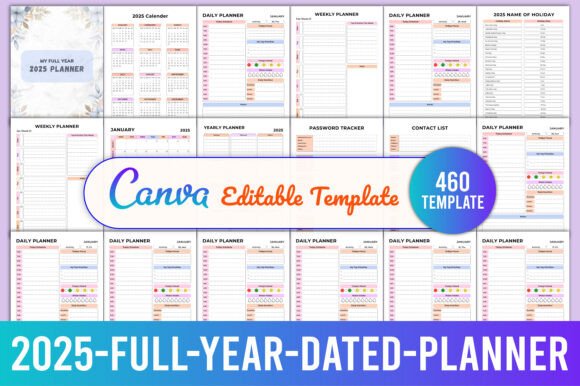
- Monthly Planner (January to December): A comprehensive monthly planning tool to set financial goals and track progress throughout the year.
- Expenses Tracker: A detailed log to monitor daily, weekly, and monthly expenses, helping identify spending patterns and areas for improvement.
- Income Tracker: A section to record and analyze sources of income, providing insights into financial stability and growth opportunities.
- Retirement Summary: A dedicated area to outline retirement plans, including savings targets, investment strategies, and expected retirement income.
- Tax Deduction: A guide to understanding and maximizing tax deductions, helping reduce taxable income and increase net earnings.
- Sinking Fund Tracker: A tool to save money for future large purchases or unexpected expenses, promoting financial preparedness.
- Investment Tracker: A section to monitor investment performance, track portfolio diversification, and assess risk management strategies.
- New Worth Tracker: A feature to calculate and monitor net worth over time, offering a clear picture of financial progress.
- Quarterly Bills Tracker: A tool to manage and plan for recurring quarterly expenses, ensuring timely payments and avoiding late fees.
- Subscription Tracker: A list to keep track of monthly subscriptions, helping identify unnecessary expenses and optimize budgeting.
- Annual Bill Tracker: A section to organize and manage annual bills, such as insurance premiums or membership fees.
- Donation Tracker: A record of charitable contributions, useful for tax purposes and tracking personal giving habits.
- Credit Card and Checkbook Register: Tools to manage credit card transactions and checkbook entries, ensuring accurate financial records.
- Account Tracker: A central hub to monitor multiple financial accounts, including checking, savings, and investment accounts.
- Monthly and Yearly Overview: Summaries that provide a snapshot of financial activity, highlighting trends and areas for improvement.
- Annual Summary: A comprehensive review of the entire year's financial performance, offering insights for future planning.
- Future Goals: A section to set and track long-term financial objectives, such as buying a home, starting a business, or achieving financial independence.
- Debt Payoff Goals: A strategy to pay off debts efficiently, using methods like the debt snowball or avalanche approach.
- Upcoming Expenses: A list of upcoming financial obligations, helping users stay ahead of their budgeting needs.
- Weekly and Monthly Budget: Tools to create and maintain budgets, ensuring that spending aligns with financial goals.
- Yearly Planner: A long-term planning tool to set and achieve annual financial targets.
- Paycheck Budget: A guide to allocate income effectively, balancing immediate needs with long-term goals.
- Yearly Income: A summary of annual income sources, aiding in financial forecasting and planning.
- Notes Files: A space to add personal notes, observations, and reminders related to financial planning.
Benefits of Using the Editable 2025 Finance Planner
The Editable 2025 Finance Planner offers numerous benefits that make it an invaluable tool for financial management. One of the primary advantages is its flexibility. Users can customize the planner to suit their unique financial situations, whether they are managing personal finances or overseeing a business's financial operations.
Another significant benefit is the ease of use. The planner is designed to be intuitive, with clear instructions and well-organized sections. This makes it accessible to users who may not have a background in finance or accounting. Additionally, the ability to edit the planner using a free Canva account allows for seamless updates and modifications, ensuring that the planner remains relevant and effective over time.
The planner also promotes financial transparency and accountability. By tracking income, expenses, and investments, users gain a clearer understanding of their financial habits. This awareness can lead to more informed decisions and better financial outcomes. For instance, identifying recurring expenses that could be reduced or eliminated can result in significant savings over time.
Furthermore, the Editable 2025 Finance Planner supports long-term financial planning. Features such as the retirement summary and future goals section encourage users to think beyond their current financial situation and consider their future needs. This proactive approach can help users build a more secure financial foundation and achieve their long-term aspirations.
Use Cases and Practical Applications
The Editable 2025 Finance Planner is suitable for a wide range of users and scenarios. Professionals can use it to manage their personal finances while also keeping track of business-related expenses. For example, a freelance graphic designer might use the planner to track income from clients, manage project costs, and plan for taxes and retirement savings.
Business owners can leverage the planner to monitor cash flow, manage accounts payable and receivable, and plan for future growth. The monthly and yearly overview sections can provide valuable insights into the financial health of the business, helping owners make data-driven decisions. Additionally, the subscription tracker can assist in managing recurring business expenses, such as software licenses or office supplies.
For individuals, the planner can serve as a comprehensive tool for personal financial management. It can help users track their monthly budget, monitor their savings goals, and plan for major life events such as buying a home or starting a family. The debt payoff goals section is particularly useful for those looking to eliminate credit card debt or student loans, offering a structured approach to achieving financial freedom.
Students and young professionals can also benefit from using the planner. It can help them develop good financial habits early on, such as tracking expenses, saving for emergencies, and investing in their future. The retirement summary section can be especially valuable for those just starting their careers, as it encourages them to think about long-term financial planning from the outset.
Considerations and Best Practices
While the Editable 2025 Finance Planner is a powerful tool, it is important to use it effectively. One key consideration is consistency. Regularly updating the planner ensures that it remains an accurate reflection of one's financial situation. Setting aside time each week or month to review and update the planner can help users stay on top of their financial goals.
Another best practice is to integrate the planner with other financial tools and services. For example, linking the planner to a budgeting app or financial management software can streamline the process of tracking income and expenses. This integration can also provide additional insights and analytics, enhancing the overall effectiveness of the planner.
Users should also be mindful of the security of their financial information. While the planner offers a secure way to store sensitive data, it is important to follow best practices for online security, such as using strong passwords and enabling two-factor authentication. Additionally, regularly backing up the planner can prevent data loss in case of technical issues or accidents.
Finally, users should take advantage of the customizable templates provided with the planner. These templates offer a starting point for financial planning, but they can be modified to suit individual needs. Experimenting with different layouts and formats can help users find the most effective way to organize and manage their financial information.
In conclusion, the Editable 2025 Finance Planner is a versatile and practical tool that can help users take control of their financial lives. With its comprehensive features, customizable templates, and user-friendly design, it offers a valuable resource for anyone looking to improve their financial management skills. Whether used for personal or professional purposes, the planner provides the structure and guidance needed to achieve financial success and stability.